

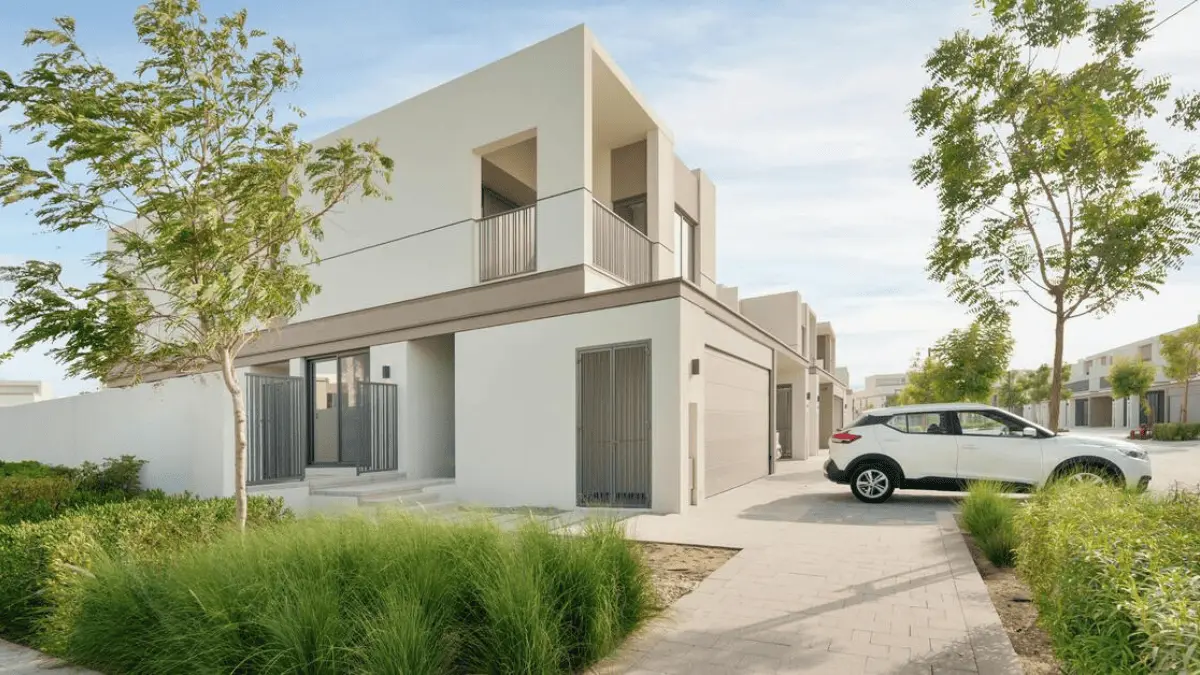


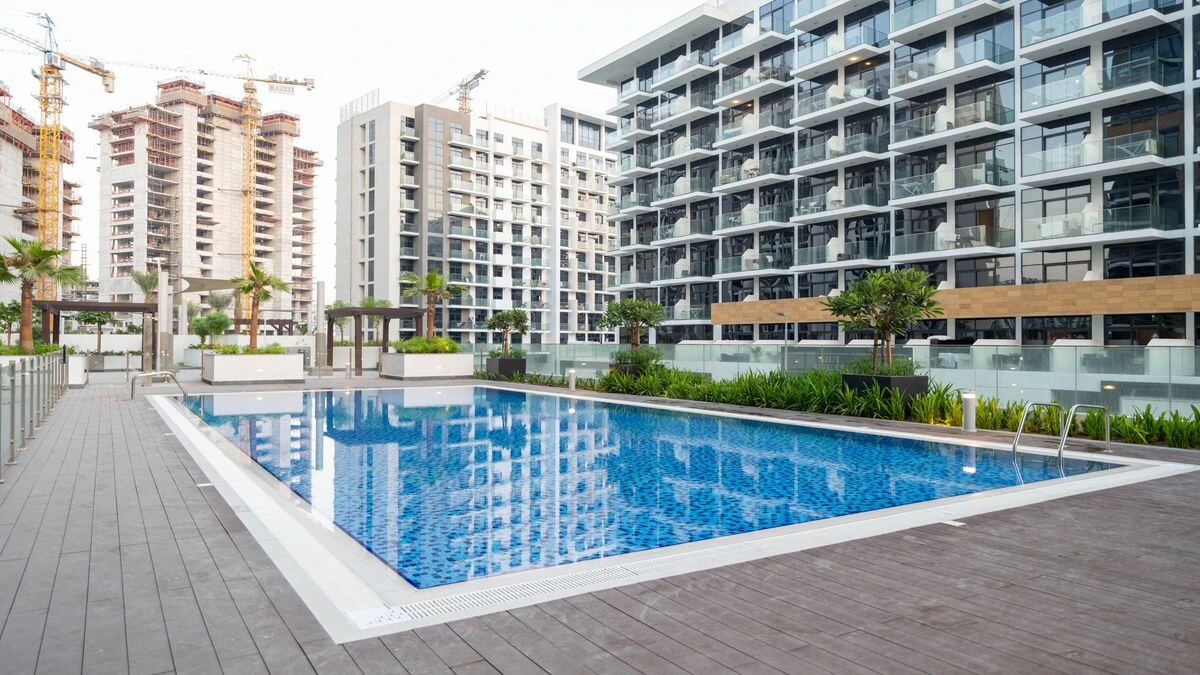
Buying property in Dubai means getting a freehold or leasehold home in one of the city’s approved ownership zones. You can do this as an expat, a non-resident, or an investor. Every transaction is registered and protected by the Dubai Land Department (DLD).
Foreigners can fully own property in Dubai’s freehold areas. There is no property tax or capital gains tax. If you buy for AED 2 million or more, you can get a 10-year Golden Visa. The main trade-offs are the upfront costs (plan for 6–8% extra) and, if you use a mortgage, a minimum deposit set by the UAE Central Bank.
This guide covers every key decision. Each section answers a main question and links to a detailed guide for that step, from the process and costs to mortgages, Golden Visas, and whether to buy or rent. All figures are current for 2026 and come from the Dubai Land Department and Central Bank of the UAE.
Table of Contents
Can foreigners buy property in Dubai?
Yes. Foreigners, whether resident in the UAE or not, can buy and fully own property in Dubai’s designated freehold areas, with the same ownership rights as UAE nationals within those zones. You don’t need a residence visa to buy, and you don’t need to live in the UAE.
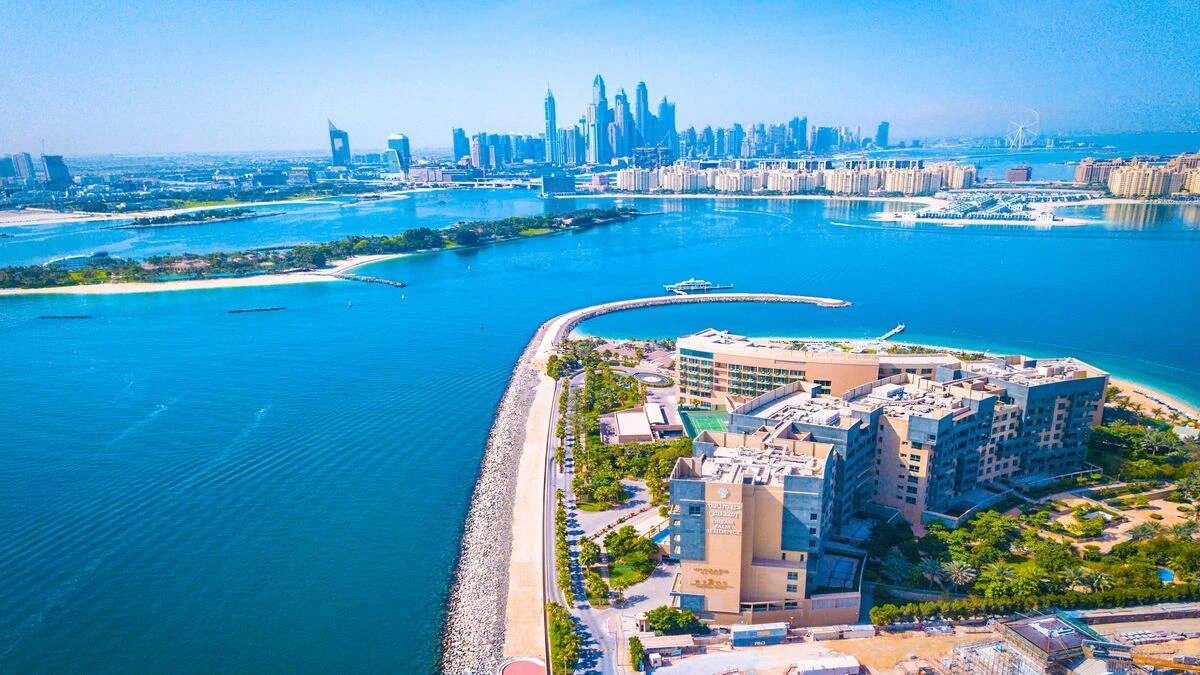
Dubai has more than 60 freehold zones, including Downtown Dubai, Dubai Marina, Palm Jumeirah, Business Bay, JVC, Dubai Hills Estate, and MBR City. In these areas, you own the property and the land outright, and it passes to your heirs. Outside freehold zones, some areas are leasehold (ownership for a fixed term, commonly up to 99 years) or restricted to UAE and GCC nationals.
The single most important check before you fall in love with a unit is confirming it sits in a freehold area open to your nationality.
Full details: Can Foreigners Buy Property in Dubai? and Buying Property in Dubai as a Non-Resident — Step by Step.
What does it actually cost to buy property in Dubai?
On top of the purchase price, set aside about 6–8% of the property value for one-off costs. The biggest is the DLD transfer fee at 4%. The rest covers agency commission, registration, and, if you use a mortgage, financing fees.
Here’s a typical cost breakdown for a cash purchase, using an AED 2,000,000 property as an example:
| DLD transfer fee | 4% of price | AED 80,000 |
| DLD admin / title deed | Fixed | ~AED 580 |
| Agency commission | 2% + 5% VAT | ~AED 42,000 |
| Trustee office / registration | Fixed | ~AED 4,000–5,000 |
| Total (cash buyer) | ~6.3% | ~AED 126,000–130,000 |
If you buy If you use a mortgage, add mortgage registration (0.25% of the loan plus about AED 290), a bank arrangement fee (up to 1% of the loan), a valuation fee (around AED 2,500–3,500), and first-year property and life insurance. These usually bring total buying costs to about 7–8% of the price. Buyers usually pay the 4% DLD fee, but some developers cover it as an incentive for off-plan sales.
Breakdown: DLD Fees Explained — The 4% Transfer Fee and Every Other Cost, and Service Charges in Dubai — Reasonable vs Red Flag.
What is the step-by-step process of buying property in Dubai?
Buying a ready (secondary-market) property in Dubai follows a clear sequence. First, agree on terms and sign a Memorandum of Understanding (MOU). Next, pay a deposit. Then, get the developer’s No Objection Certificate (NOC). Finally, complete the transfer at a DLD trustee office, where you get the title deed in your name.
- Agree on the terms and sign the MOU (Form F). Both you and the seller sign the standard DLD contract. You pay a deposit, usually 10%, which is held by the agent or trustee.
- Apply for the NOC. The seller asks the developer for a No Objection Certificate to confirm there are no unpaid service charges. You need this before the transfer.
- Arrange your finance if you need a mortgage. The bank’s final approval and valuation usually happen at the same time.
- Transfer at the trustee office. The buyer and seller transfer at the trustee office. The buyer and seller (or their POA holders) go to a DLD-approved trustee office, pay the balance with manager’s cheques, settle the fees, and get the new title deed right away.per before completion) is different: you sign a Sale and Purchase Agreement (SPA), your payments go into a RERA escrow account, and your interim ownership is registered as Oqood until handover.
Full guides: Dubai Property Buying Process — 7 Steps From Offer to Title Deed, NOC Certificate in Dubai Property Sales, and our complete Off Plan Property Playbook.
Should you buy with cash or a mortgage?
Choosing between cash or a mortgage depends on your capital, residency, and goals. Cash means no financing fees or interest and a faster purchase. A mortgage lets you keep more capital and buy sooner, but you’ll need a deposit and will pay interest.
Minimum deposits for residents: for a first property under AED 5 million, expats generally need at least a 20% deposit (so up to 80% financing); UAE nationals need 15%. Above AED 5 million, and for second properties, the deposit rises.
The same Central Bank caps don’t apply to non-residents, and lenders typically ask for 35–40% down. Fixed rates in 2026 have sat in the high-3% range, tracking EIBOR.
Full guides: Cash vs Mortgage in Dubai — Which Is Better for Expats?, and Best Mortgage Brokers in Dubai (2026) — Who to Trust.
Can buying property in Dubai get you a Golden Visa?
Yes. Buying property worth AED 2 million or more in Dubai qualifies you for a 10-year renewable Golden Visa. As of 2026, both mortgaged and off-plan properties count toward the threshold as long as the certified value reaches AED 2 million.
This is a major reason why many international buyers choose Dubai. The purchase is not just an asset; it also gives you and your family a path to long-term residency, with no minimum stay. There is also a separate two-year investor visa, and in 2026 Dubai removed the old AED 750,000 minimum for sole owners on that visa.
Full guide: Dubai Property as Golden Visa Investment — The AED 2M Path.
Should you buy instead of Rent in Dubai?
If you plan to stay long enough to cover the 7% transaction cost (usually 3–5 years or more), want to build equity, or want the Golden Visa. Renting is better if you might leave soon, your job is uncertain, or you prefer flexibility over ownership.
The numbers matter. Because of Dubai’s high transaction costs, buying only beats renting if you hold the property long enough. Always run the math for your own situation before deciding.
Full analysis: Should You Rent or Buy in Dubai 2026: The Honest Math.
Which areas should you buy in?
The best area to buy in Dubai depends on your goal. If you plan to live there, focus on commute, community, and schools. If you are investing, look at rental yield and supply versus demand. Established freehold areas are more liquid and predictable. Newer masterplans have lower prices and higher, but less certain, growth.
Don’t just go for the most-hyped launch. Choose an area that fits your reason for buying, whether to live in or rent out. Check how much new supply is coming to that location.
Full guides: Best Areas to Live in Dubai and Best ROI Areas in Dubai for Property Investment.
Frequently asked questions about buying property in Dubai.
Do you pay tax on property in Dubai?
No. Dubai has no annual property tax, no capital gains tax on sale, and no tax on rental income for individuals. The main government cost is the one-off 4% DLD transfer fee at purchase. However, you will pay ongoing service charges to the building’s owners’ association.
Can you buy property in Dubai without living there?
Yes. Non-residents can buy freehold property in Dubai without a UAE residence visa and without living in the country. You can complete the purchase in person or through someone holding your Power of Attorney. Non-resident mortgage buyers are usually asked for a larger deposit than residents.
How much deposit do you need to buy property in Dubai?
For a mortgage on a first property under AED 5 million, expat residents generally need at least 20% of the price as a deposit and UAE nationals 15%, per Central Bank rules. Non-residents are typically asked for 35–40%. Cash buyers need the full price plus roughly 6–8% in fees.
Is it a good time to buy property in Dubai in 2026?
Market conditions change, so this is not investment advice. After a strong 2024–25 run, early 2026 saw a brief price dip and then a rebound, which gave buyers more negotiating room on discretionary costs like agency commission and developer incentives. Whether it suits you depends on your own timeline and finances, not on trying to time the market.
Your next steps
This guide is the overview. The detailed guides below go deep on each decision:
- Who can buy: Can Foreigners Buy Property in Dubai? and Buying as a Non-Resident
- The money: DLD Fees Explained, Cash vs Mortgage, and Best Mortgage Brokers in Dubai
- The process: The 7-Step Buying Process and NOC Certificates Explained.
- Residency: Dubai Property as a Golden Visa Investment
- The decision: Renting vs Buying — The Honest Math
- Off-plan specifically: our complete Off-Plan Property Playbook
Thinking about buying property in Dubai and want an honest, no-pressure opinion first?
Message us on WhatsApp at +971 50 404 7890. We’re Dubai residents, not a sales team — we’ll give you a straight answer before you commit to anything.
Primary sources: Dubai Land Department (dubailand.gov.ae), Central Bank of the UAE (Mortgage Loan Regulation), RERA.
Disclaimer: This guide is informational, not financial or investment advice. Fees, mortgage caps, and visa rules change; verify current details with the Dubai Land Department, your bank, and your chosen developer before making any purchase decision.