







Good news: if you’re a foreigner, you can absolutely buy property in Dubai. You don’t need to be a resident, and it doesn’t matter what your nationality is—as long as you’re looking in one of Dubai’s freehold zones, you’re in the clear.
Once you buy, the property is registered in your name with the Dubai Land Department, and you’re free to sell, rent, or even pass it on however you like.
Plus, there’s no annual property tax to worry about. In this guide, I’ll walk you through where you can buy, what it’ll cost, how the process works, and how owning property can even open the door to a long-term UAE residence visa.
Table of Contents
Can foreigners really buy property in Dubai?
Yep, you really can buy property in Dubai as a foreigner. Since 2002, Dubai has opened up special freehold areas where non-UAE nationals can own property outright—just like a local. Before that, only UAE nationals could own, but now, if you stick to the freehold zones, you get the same rights as any citizen.
With freehold ownership, your name goes right on the title deed with the Dubai Land Department. That means you own the property (and your share of the land) and can sell, rent out, or pass it on however you want—no age limits, and you don’t have to be a UAE resident.
If you’re looking outside the freehold zones, you can still get long-term leasehold deals (usually up to 99 years), but you won’t actually own the land itself in those cases. So the key distinction is straightforward: freehold gives ownership, while leasehold gives long-term use.
This open approach is a big reason why so many people from around the world are drawn to Dubai’s property market. You get full ownership rights, a clear and transparent title system, and no restrictions based on nationality—as long as you’re in a freehold zone. That brings us to the next question: where can foreigners buy property in Dubai?
Where can foreigners buy property in Dubai?
If you’re a foreigner, you can only buy freehold property in Dubai’s special freehold zones. These cover everything from waterfront spots to business districts and some more budget-friendly neighbourhoods. If you’re looking outside these zones, you’re limited to long-term leasehold, not full ownership.
| Zone | Example areas |
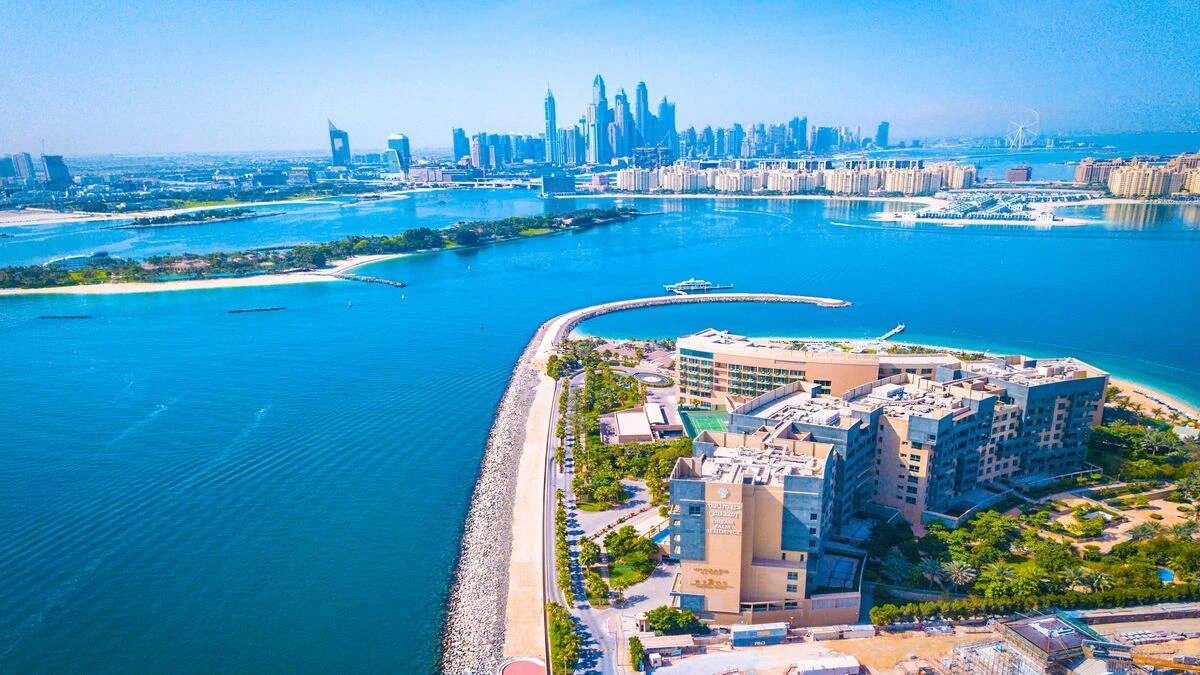
| Western Dubai | Dubai Marina, Palm Jumeirah, Al Barsha South — waterfront and urban communities popular with expats |
| Central Dubai | Downtown areas near Sheikh Zayed Road, Al Jaddaf, Emirates Hills — close to business districts |
| Eastern Dubai | Mirdif, Ras Al Khor, Al Quoz — generally more affordable, suited to first-time buyers |
| Southern Dubai | Jebel Ali, Al Sufouh, master-planned island and resort-style developments |
When choosing where to buy, weigh proximity to work, rental demand, and lifestyle fit as much as price — a beachfront villa and a Business Bay high-rise serve very different buyers. Always confirm whether a specific building or plot is freehold or leasehold directly before committing, since zone boundaries and designations can be precise. Once you’ve narrowed the area, choose whether to buy ready or off-plan.
Should you buy ready or off plan property?
If you go for a ready property, you can move in or start renting it out right away, and you’ll get your title deed as soon as you complete the purchase. Off-plan properties, on the other hand, usually come with a lower upfront price and let you pay in instalments as the building goes up.
Your money is kept safe in a RERA-approved escrow account. There’s no one-size-fits-all answer here—it really depends on whether you want something now or you’re happy to wait for a better deal and more flexible payments.
Ready properties are great if you want to see exactly what you’re getting, move in right away, or start earning rental income from day one. Off-plan is better if you’re thinking long-term, want to pay less upfront, and don’t mind waiting while the place is being built (and taking on the usual risks that come with buying before it’s finished).
The decision deserves its own deep dive: Off Plan vs Ready Property in Dubai: Which Is Better? If you’re leaning off-plan, our full Off Plan Property in Dubai: The 2026 Buyer’s Complete Playbook covers payment plans, escrow protection, and developer comparisons in depth. Once you’ve decided, the next question is what the purchase will cost.
What does it cost to buy property in Dubai as a foreigner?
There’s no annual property tax in Dubai, but don’t forget about the one-time fees when you buy. You’ll need to cover the Dubai Land Department transfer fee, your agent’s commission, and a few smaller admin charges.
As a rule of thumb, plan for about 6–8% extra on top of the purchase price to cover everything, but always double-check the exact numbers for your deal. Before you move on, note that these costs are only part of the overall budget.
| Fee | Typical amount | When it’s paid |
| DLD transfer fee | ~4% of price | At transfer, often split buyer/seller (negotiable) |
| Agent commission | ~5% of price | On signing the sale agreement |
| Mortgage registration | ~0.25% of loan + admin fee | If financing with a mortgage |
| Trustee office fee | Fixed fee + VAT | At the DLD trustee transfer appointment |
| Title deed issuance | Small fixed fee | When the title deed is issued |
| Developer NOC (resale) | Fixed fee, varies | Confirms seller’s service charges are settled |
| Service charges | Per sq ft, annual | Ongoing, yearly |
These numbers are a ballpark—fees can change, so check the latest details before you buy.
Full fee breakdown: DLD Fees Explained — The 4% Transfer Fee and Every Other Cost
Can foreigners get a mortgage to buy property in Dubai?
Yes, UAE banks lend to foreigners. UAE banks will lend to non-residents and expats, usually covering a certain percentage of the property’s value (how much depends on the price and whether it’s ready or off-plan). Mortgages can run up to about 25 years.
The details can vary a lot between banks, so it’s always smart to check the latest terms before you commit. Financing tends to allow a higher loan-to-value ratio than off-plan, reflecting lower construction risk, and higher-value properties often carry a lower maximum LTV than more moderately priced ones.
Deposits are typically a meaningful share of the purchase price, not a token amount. Get a mortgage pre-approval letter before house-hunting; it confirms your borrowing capacity and shows sellers you’re serious. From there, the buying process follows a fairly clear sequence.
For the cash-vs-financing decision: Cash vs Mortgage in Dubai — Which Is Better for Expats? and Best Mortgage Brokers in Dubai.
What is the step-by-step process to buy property in Dubai as a foreigner?
Here’s how the buying process usually goes for foreigners in Dubai: first, figure out your goals and budget. If you need a mortgage, get pre-approved. Next, pick your freehold area, find a RERA-licensed agent, and sign the Memorandum of Understanding (or Sale and Purchase Agreement).
If you’re buying a resale property, the seller will need to get a No Objection Certificate. Finally, you’ll both head to the DLD trustee office to complete the transfer and get your title deed. After that, you can move on to the practical details of ownership.
- Start by clarifying your goal and budget. Are you buying a place to live in, or is this purely an investment? Do you want something ready now, or are you okay with off-plan? Add about 6–8% extra for fees on top of the price.
- If you’re planning to get a mortgage, get pre-approved. That letter not only tells you how much you can borrow, but it also shows sellers and developers you’re serious.
- Pick your freehold area next. Think about what fits your lifestyle, your budget, and whether you want strong rental potential—maybe a waterfront spot, something central, or a more affordable neighbourhood on the edge.
- Make sure you’re working with a RERA-licensed agent. Every legit agent has one, so don’t hesitate to ask to see their license before you get started.
- Once you’ve agreed on the terms, both sides sign the MOU or SPA, and you’ll pay a security deposit—usually about 10%.
- If you’re buying a resale property, the seller needs to get a No Objection Certificate to show all service charges are paid up.
- Then it’s time for the big day at the DLD trustee office. You and the seller (or your representatives) show up, pay the remaining amount and fees, and you’ll receive your title deed.
- After the transfer, don’t forget to register your utilities with DEWA in your name. Then you’re free to move in, rent it out, or hold onto your new place. With ownership in place, the next question is whether it can also support a Golden Visa application.
Full step-by-step detail: How to Buy Property in Dubai: 7 Steps to Title Deed and NOC Certificate in Dubai Property Sales — Why and How.
Can property ownership get you a Golden Visa?
If you buy property above a certain value, you could qualify for a long-term UAE residence visa (the famous Golden Visa). This lets you live, work, and study in the UAE without needing a sponsor, and you can even sponsor your family.
It’s a huge perk for foreign buyers, but just owning the property isn’t enough—you’ll still need to apply for the visa separately. To apply, you’ll need paperwork showing your property’s value from the land authority, and there are extra rules if you bought with a mortgage instead of cash.
The exact investment amount and visa terms can change, so always double-check the latest info from official sources before making any big plans. After that, it’s also worth thinking about the ongoing costs of ownership.
To apply, you’ll need paperwork showing your property’s value from the land authority, and there are extra rules if you bought with a mortgage instead of cash. The exact investment amount and visa terms can change, so always double-check the latest info from official sources before making any big plans.
Full breakdown: Dubai Property as Golden Visa Investment — The AED 2M Path
What ongoing costs and taxes apply after you buy?
There’s no annual property tax or capital gains tax on homes in Dubai, but you will pay ongoing service charges for building and community upkeep, plus a housing fee on your utility bills (based on the property’s rental value).
These costs are pretty reasonable compared to many other countries, but make sure to include them in your overall budget—not just the purchase price. Service charges can vary widely from one community or building to another, so compare them before you buy—not after.
And if you’re a tax resident somewhere else, keep in mind that rental income or profits from selling might still be taxed back home. Check with a tax advisor who knows your situation.
Related: Service Charges in Dubai — Reasonable vs Red Flag
What mistakes should you avoid when buying property in Dubai as a foreigner?
Some of the biggest mistakes I see foreign buyers make? Not budgeting enough for fees, skipping the escrow check on off-plan deals, forgetting to compare service charges, working with agents who aren’t licensed, and thinking that buying automatically gets you residency.
The good news is, all of these are easy to avoid if you do a bit of homework up front.
- Under-budgeting: Plan for about 6–8% extra on top of the purchase price to cover all the fees—not just the main transfer fee.
- Skipping escrow checks on off-plan: Make sure the project is RERA-registered and has a valid escrow account before you hand over any money.
- Ignoring service charges: Compare the yearly fees for different communities—they can make a real difference to your returns.e Unlicensed agents: Always ask to see your agent’s RERA license before you start working together. The Golden Visa requires a separate application, even for qualifying purchases.
Frequently asked questions
Can I buy property in Dubai without living there?
Yes, you can buy property in Dubai as a foreigner without ever setting foot there. You can use a power of attorney or a registered agent to handle everything for you, and there’s no rule saying you have to live in the UAE to own freehold property. Lots of international buyers do the whole process remotely.
Are there annual property taxes in Dubai?
Nope, there’s no annual property tax on homes in Dubai. You’ll pay a one-time transfer fee when you buy, plus ongoing service charges and a housing fee on your utilities, but nothing yearly based on the property’s value.
How long does the buying process take?
If you’re paying cash, you could wrap up the whole purchase in as little as a week (if everything’s straightforward). If you’re using a mortgage, expect it to take a few weeks, depending on how fast the bank moves. Off-plan deals are a bit different—the timeline depends on the payment plan, not a single closing date.
Do I need to be physically present to buy property in Dubai as a foreigner?
No, you don’t have to be in Dubai to buy property. You can do the whole thing from abroad using the Dubai Land Department’s online transfer system or by giving power of attorney to someone in Dubai. Lots of international buyers go this route.
Does buying property in Dubai automatically grant residency?
No, owning property alone doesn’t automatically grant you UAE residency. If your purchase is above the qualifying amount, you can apply for the Golden Visa—but you still have to go through the application process separately.
Your next steps
That’s the big picture for buying property in Dubai as a foreigner. If you want to dig deeper into any step, check out the guides below—they’re all part of my full Dubai real estate series.
- Off-plan specifically: Dubai Off-Plan Property — The 2026 Buyer’s Complete Playbook
- Financing: Cash vs Mortgage in Dubai and Best Mortgage Brokers
- Every cost involved: DLD Fees Explained
- The Golden Visa path: Dubai Property as Golden Visa Investment
Want to chat about your own situation? Just drop me a message on WhatsApp. I’m happy to help you think through location, budget, and your next steps—no pressure at all.
Last reviewed: by Sean, Dubai-resident writer covering the property market since 2020.
Primary sources: Dubai Land Department (dubailand.gov.ae), Real Estate Regulatory Agency (RERA).
Disclaimer: This guide is informational, not financial, legal, or tax advice. Fees, lending policy, and visa thresholds change; verify current figures with the Dubai Land Department, your bank, and a qualified advisor before making a purchase decision.