




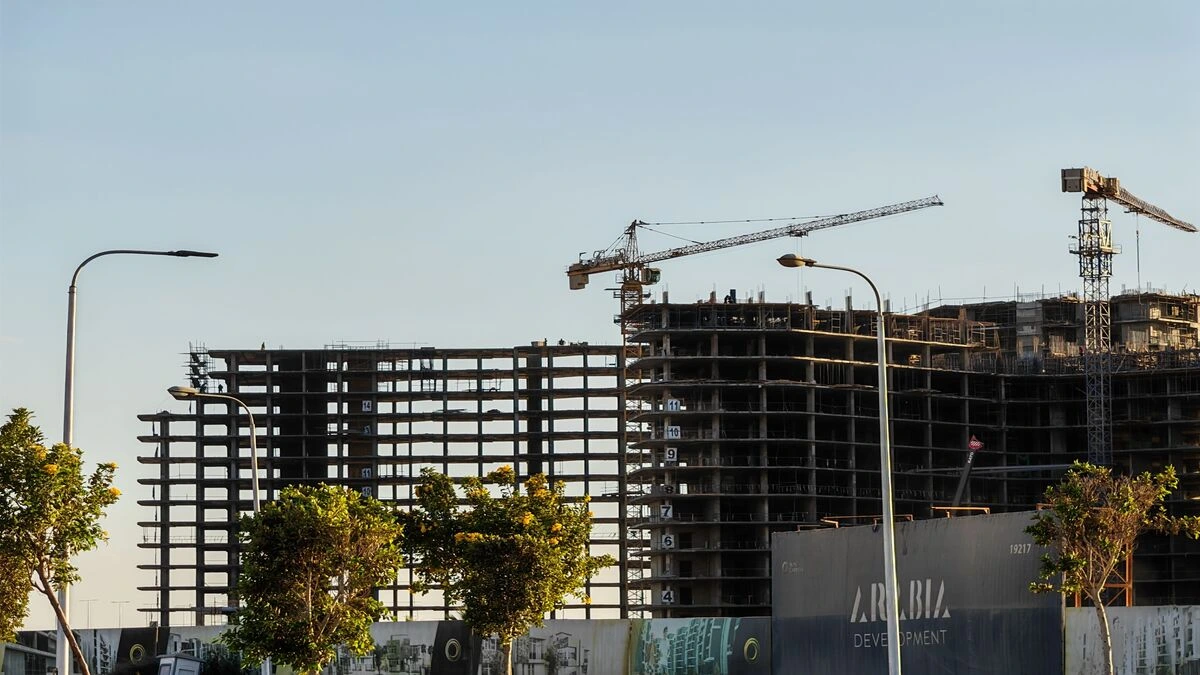
Off plan property in Dubai means buying a unit directly from a developer before or during construction, usually with a low down payment (often 10 to 20 per cent), with the balance paid over time, often linked to construction milestones or extending after handover.
People choose off plan for lower entry prices, flexible payment plans, and the chance for property values to grow. In contrast, ready property gives you immediate rental income and no construction risk. RERA-mandated escrow accounts protect your money.
The main risks today are developer delays and picking the wrong project, not outright fraud, which is now rare among registered developers. This guide explains how payment plans work, how to compare developers, the step-by-step buying process, and which risks you should take seriously. This guide is part of our complete Dubai real estate guide – covering buying, renting, mortgages, and the full property-buying process.
Table of Contents
What is off plan property in Dubai?
A Dubai off plan property is a unit purchased directly from a developer before construction is complete, sometimes before it has even started, at a price and payment structure set by the developer rather than negotiated on the resale market.
It is the dominant way new supply enters the Dubai market, and it differs fundamentally from buying “ready” or secondary-market property, in which you buy a completed, already titled unit from its current owner.
Every off plan purchase in Dubai follows a set legal process. You sign a Sale and Purchase Agreement (SPA) with the developer, your payments go into a RERA-regulated escrow account for that project, not the developer’s general funds, and your temporary ownership is registered with the Dubai Land Department through Oqood until you get the final title deed at handover.
This system was put in place to protect buyers after major project failures in 2008 and 2009, which is why buying off plan in Dubai is much safer now than it used to be.
Off plan sales account for a significant share of Dubai’s property market, with major developers such as Emaar, DAMAC, Sobha, Nakheel, Azizi, and many others launching new projects in both established and emerging areas.
Knowing how the payment plan, escrow protection, and registration process work is the foundation for the rest of this guide.
Why buy off plan rather than ready property in Dubai?
A Dubai off plan property is worth buying instead of ready property when you want a lower entry price, a payment plan that spreads costs over years rather than a lump sum, and you’re willing to accept construction-period risk in exchange for potential capital appreciation by handover.
Ready property is worth buying instead when you want immediate rental income, a physical unit you can inspect before buying, and zero construction or delay risk.
There are three main reasons people choose off-plan. First, entry prices are usually lower than those of similar ready units in the same area, since buyers assume time and construction risk. Second, payment plans mean you don’t need to pay the full price upfront.
Many launches require only 10 to 20 per cent at booking, with the rest paid over construction milestones or even years after handover through post-handover plans.
Third, early buyers in successful projects have often seen property values rise between launch and handover, though this is never guaranteed.
It’s important to consider the trade-offs, too. You can’t see the finished property before you buy, you’re relying on a brochure, floor plan, and the developer’s reputation.
Handover dates often get delayed, sometimes by a year or more, even with well-known developers. You also won’t earn rental income during construction, while someone buying a ready property could start earning rent right away.
The best choice depends on your timeline, risk tolerance, and whether you want income now or are aiming for growth later.
| Factor | Off-plan | Ready property |
| Entry price | Typically lower | Market price, negotiable |
| Payment structure | Spread over years, low down payment | Often lump sum or mortgage |
| Rental income | None until handover | Immediate |
| Construction/delay risk | Real — delays are common | None |
| Inspect before buying | No — floor plans only | Yes |
| Appreciation potential | Higher, not guaranteed | Lower, more predictable |
| Best for | Longer time horizon, growth focus | Immediate income, lower risk tolerance |
Full breakdown: Off plan vs Ready Property in Dubai — Which Should You Actually Buy?
How do off plan payment plans work?
Off plan payment plans in Dubai let you pay for your property in stages: a booking deposit, payments tied to construction progress, and sometimes payments after you move in.
There are two main types: milestone-based plans, where payments are tied to construction progress, and 1 per cent monthly plans, where you pay the same amount each month, no matter how construction is going.
The details vary by developer and project, so it’s important to understand how each plan works rather than just the down payment percentage.
A typical milestone-based plan starts with a booking deposit, usually 10 to 20 per cent, and then requires payments at specific construction stages.
For example, you might pay 10 per cent when construction is 20 per cent complete, another 10 per cent at 50 per cent completion, and so on, with the final balance, often 10 to 40 per cent, due at or after handover. In a 1 per cent monthly plan, you pay the same amount each month from booking until a set point, sometimes even after handover.
This option is popular because it’s predictable and doesn’t rely on construction hitting specific milestones on time.
Post-Handover Payment Plans (PHPPs) are becoming more common and are worth understanding. They let you move in or start renting out the unit while you pay off the remaining balance over one to five years after handover.
This can be appealing because you can use rental income to help with payments. However, it’s important to read the fine print carefully, as PHPP terms, interest rates, and late-payment penalties can vary widely between developers.
Full detail: Dubai Off plan Payment Plans — 1% Monthly, PHPP, 80/20 Explained, 1% Monthly Payment Plans — Real Math, Real Risk, and Post-Handover Payment Plans (PHPP) Explained.
How is your money protected? (RERA escrow accounts)
Your off plan payments in Dubai are protected by a RERA-mandated escrow account for each project. This means your money is held by a regulated bank and only released to the developer in stages as construction progress is confirmed.
The developer can’t use your money for other projects or spend it freely. This system, managed by the Real Estate Regulatory Agency (RERA) and tracked via the Mollak platform, is the main reason the off plan market today is much safer than it was before 2008.
The mechanism works through independent verification. An appointed escrow agent (a bank) holds the account, and funds are released to the developer only after an independent consultant certifies that a corresponding percentage of construction work is genuinely complete, not simply because the developer says so.
This means a developer cannot collect your full payment and then fail to build, because the money physically isn’t accessible to them without verified progress.
The Mollak system adds another layer of transparency. It’s the platform RERA uses to monitor escrow accounts and service charges across Dubai, and it’s making project financial information easier to access.
As a buyer, always check that a project has a valid RERA escrow account and Oqood registration before you pay anything. Be very cautious if a developer or agent asks you to pay outside the official escrow system. That is the biggest red flag in the market.
Full detail: RERA Escrow Account: How Your Off plan Money Is Protected, Mollak System — How Dubai Service Charge Disputes Work, and Oqood — The Off plan Interim Registration Explained.
Which Dubai real estate developer should you buy from?
Choosing the right developer in Dubai is one of the most important decisions you’ll make. It affects your chances of getting your property on time, the quality of the finished unit, and how easily problems are resolved if they come up.
The big developers like Emaar, DAMAC, Sobha, and Nakheel each have their own strengths. Many smaller developers range from excellent to quite risky. To choose well, look beyond marketing and compare their track record, financial stability, and reputation after handover.
Emaar is Dubai’s largest and most established developer, known for a strong delivery track record, premium positioning (Downtown Dubai, Dubai Hills Estate, Dubai Creek Harbour), and the highest resale liquidity. You pay a premium for this reputation.
DAMAC is a major luxury-branded developer with a large portfolio and generally reliable delivery, though individual project timelines vary.
Sobha Realty has built a strong reputation for construction quality and in-house construction capability (they build rather than fully outsource), appealing to buyers who prioritise finish quality.
Nakheel, the government-backed master developer behind Palm Jumeirah and other mega-projects, offers scale and government backing, but a more variable track record on individual projects.
Apart from the big four, there are many other developers in Dubai, like Azizi, Danube, Binghatti, Ellington, and more. Some are excellent and growing quickly, while others are new and have limited experience.
When checking any developer, ask how many projects they’ve delivered on time, what their after-handover service and defect resolution are like, and whether they are financially stable enough to handle a market slowdown. Don’t rely only on marketing to answer these questions.
| Developer | Known for | Consideration |
| Emaar | Largest, strongest track record, premium locations | Premium pricing, highest resale liquidity |
| DAMAC | Luxury branding, large portfolio | Timelines vary by project |
| Sobha | Construction quality, in-house build | Growing portfolio, strong reputation for finish |
| Nakheel | Government-backed, mega-projects (Palm) | Track record varies by individual project |
Full comparison: Emaar vs DAMAC vs Sobha vs Nakheel — Which Developer to Trust and Best Off plan Projects in Dubai for 2026 — Ranked by Risk & Return.
What is the off plan buying process, step by step?
Buying off plan property in Dubai follows a defined sequence: choose a project and unit, pay a reservation deposit and sign the Sale and Purchase Agreement, complete Oqood registration with the Dubai Land Department, make instalment payments per your payment plan as construction progresses, and receive your title deed at handover once the unit is complete and the final balance is paid.
Understanding each step helps you know what to expect and what documentation to request at every stage.
The process starts with unit selection and a reservation deposit (commonly AED 20,000–50,000 or a percentage of the price) to hold your chosen unit while the SPA is prepared.
You then sign the Sale and Purchase Agreement, which sets out the full payment schedule, handover date, unit specifications, and your rights if the developer misses milestones.
Within a set period after the SPA, the developer registers your interim ownership as Oqood with the Dubai Land Department; this is your official record of purchase before the final title deed exists.
During the construction period, you pay instalments per your chosen plan, and it’s worth requesting periodic construction progress updates or site visits when developers offer them.
As handover approaches, you’ll typically have the opportunity to conduct a snagging inspection to flag any defects before final acceptance.
At handover, once your final balance is paid and any snagging issues are resolved, the Dubai Land Department issues your title deed, and the property is fully and legally yours.
Full step-by-step guide: Dubai Property Buying Process — 7 Steps From Offer to Title Deed and NOC Certificate in Dubai Property Sales — Why and How.
What are the real risks of buying off plan in Dubai?
The main risks of buying off plan in Dubai today are handover delays, buying into an oversupplied area, or choosing a project that underperforms. There is also the usual market risk that comes with any property investment.
Outright fraud is now rare among RERA-registered projects with proper escrow accounts, but it can still happen, especially with unregistered or off-market deals.
It’s important to be clear about which risks are real and which are just old reputation. han the SPA’s stated date, even with reputable developers.
Your SPA should specify a grace period and your rights (potential compensation or exit options) if the delay exceeds it. Read this clause carefully before signing, and understand that some standard SPA language favours the developer more than buyers expect.
Buying in an oversupplied area or a project competing against dozens of similar towers is a market risk that shows up not as fraud but as disappointing rental yields or resale value at handover. This is why area and project selection matter as much as developer choice.
The real fraud risk that still exists usually involves unregistered developers, projects without verified RERA or Oqood registration, or any request to pay outside the official escrow account.
You can check all these red flags before you pay anything. Always verify RERA registration and escrow status directly with the Dubai Land Department before signing.
If anyone pressures you to pay quickly, informally, or outside the escrow system, treat it as a clear warning to stop, not something to negotiate.
Full guide: How to Avoid Dubai Off plan Scams — Due Diligence Checklist and What Happens If a Dubai Developer Delays Handover? Your Rights.
What returns can you realistically expect from off plan property?
Off plan property in Dubai has usually offered rental yields of 5 to 8 per cent once completed and rented out. Capital appreciation between the launch price and handover has varied widely across projects, areas, and market cycles.
Projects in good locations have often seen strong appreciation, while those in oversupplied areas have sometimes underperformed or even lost value compared to the launch price. The biggest mistake buyers make is treating any single number as a guarantee.
Realistic expectation-setting. To set realistic expectations, it’s important to separate the two main sources of return. Rental yield, once your unit is finished and rented out, usually falls in the 5 to 8 per cent range, depending on the area and type of unit. This is similar to yields from ready properties. ”
Capital appreciation between booking and handover is much less predictable. It depends on the overall market during construction, how much new supply is coming to the area, and whether your project does better or worse than nearby competition. off plan as a property purchase with a favourable entry structure, not a guaranteed short-term flip.
Buyers who do well tend to hold a longer view, choose established or clearly improving areas over speculative ones, and treat any appreciation as a bonus on top of a purchase they’d be happy to hold and rent regardless. Buyers who get burned tend to be the ones chasing the newest, most-hyped launch purely for a quick resale flip in an oversaturated segment.
See Dubai Off plan Resale (Flipping) Explained — Rules, Fees, ROI for specifics on exiting before handover.
Which areas in Dubai are best for off plan property right now?
The best areas for off plan property in Dubai right now have real infrastructure investment, a solid masterplan, and aren’t already flooded with new projects. Emerging and growing areas like MBR City, Dubai South, and Dubai Creek Harbour each have their own mix of risks and growth potential, so it’s important to understand these differences before choosing a project.
MBR City (Mohammed Bin Rashid City) is a large, centrally located masterplan anchored by projects such as Sobha Hartland and District One, offering a strong long-term growth case given its central location and ongoing infrastructure development.
Dubai South, positioned around Al Maktoum International Airport’s long-term expansion, offers a longer-horizon growth thesis tied to the airport’s eventual scale, at generally lower entry prices than more established areas.
Dubai Creek Harbour, an Emaar masterplan near Ras Al Khor, combines waterfront positioning with proximity to Downtown and has attracted significant sustained development.
Choosing an area is really about betting on that area’s future, not just Dubai’s overall market. Even in a strong area, a part with too many new projects can still underperform. This is why an honest, area-specific guide is much more useful than general developer marketing.
Full guides: MBR City Off plan Guide — Sobha Hartland, District One, Dubai South Off plan— Investment Analysis, and Dubai Creek Harbour Off plan— Investment Outlook 2026.
Frequently asked questions about off plan property in Dubai.
Is off plan property in Dubai safe to buy?
Yes, off plan property in Dubai is much safer now than it was before 2008, as long as you buy from a RERA-registered developer with a verified escrow account and Oqood registration. Your payments are placed in a regulated escrow account and released to the developer only after construction progress is confirmed. This prevents the fund-diversion problems that hurt the market in the past. The main risks now are handover delays and choosing the wrong area or project, not fraud, as long as you check registration before paying.
How much deposit do you need for off plan property in Dubai?
Off plan property in Dubai usually requires a booking deposit of 10 to 20 per cent of the purchase price. This can vary by developer and project, and the remainder is paid in instalments during construction and sometimes after handover. Some 1 per cent monthly plans lower the initial payment by spreading it over time. Always check the exact deposit and payment schedule in the Sale and Purchase Agreement before you pay anything.
Ensure that if a developer delays the handover?
If a developer delays handover in Dubai, your rights depend on the grace period and delay clauses specified in your Sale and Purchase Agreement, which typically allows a defined grace period before compensation or exit rights apply. Delays of several months are common even with reputable developers and don’t necessarily indicate a serious problem. Still, delays significantly beyond the grace period should prompt you to review your SPA rights and, if needed, seek legal advice. Reading this clause carefully before signing is essential.
Can foreigners buy off plan property in Dubai?
Yes, foreigners can buy off plan property in Dubai’s designated freehold areas with full ownership rights. These are the same areas where foreigners can buy ready property. Most major off-plan projects from Emaar, DAMAC, Sobha, and other big developers are in freehold zones designed for international buyers. The buying process, payment plan, and escrow protections are the same no matter your nationality.
What is Oqood registration?
Oqood is the Dubai Land Department’s interim registration system for off plan property, recording your ownership rights during the construction period before a full title deed can be issued at handover. It’s your official proof of purchase and legal interest in the unit while the project is still being built, and registering it is a standard, required step shortly after signing your Sale and Purchase Agreement. Without proper Oqood registration, your claim to the unit is much harder to establish or defend.
Can you sell off plan property before handover?
Yes, you can resell off plan property before handover in Dubai, a practice called flipping. It’s legal, but each developer has their own rules—often you need to pay a minimum percentage of the price first, and there are DLD transfer fees. Some developers limit or charge a fee for reselling before handover, so always check your project’s policy before planning to flip. The returns from flipping depend heavily on how much the project’s value has increased since launch and on the current demand for that development.
What is the difference between Off plan property and on-plan property?
Off plan property is bought from a developer before or during construction, with payments spread over time. Ready property is a finished unit with a title, bought at market price, usually paid as a lump sum or with a mortgage. Off plan usually offers a lower entry price and flexible payment terms, but you take on construction risk and don’t get rental income right away. Ready property offers immediate income and no construction risk, but it costs more upfront on risk at a higher upfront cost.
How do you verify a developer is legitimate before buying off-plan?
To make sure a developer is legitimate before buying off plan in Dubai, check their RERA registration and the project’s escrow account status directly with the Dubai Land Department. Look at the developer’s history of delivering projects on time, and treat any request to pay outside the official escrow system as a major warning sign. A trustworthy developer will easily provide this information, and you can also confirm project registration yourself using Dubai Land Department resources instead of relying only on what the developer or agent says.
Your next steps
This guide is a complete overview of off plan buying in Dubai. The cluster pages below go deep on each specific decision.
- Understanding payments: Payment Plans Explained, 1% Monthly Math, and PHPP Explained
- Protecting your money: RERA Escrow Accounts, Mollak System, and Oqood Registration
- Choosing a developer: Emaar vs DAMAC vs Sobha vs Nakheel and Best Off plan Projects for 2026
- Understanding the process: The 7-Step Buying Process and NOC Certificates Explained.
- Avoiding risk: How to Avoid Off plan Scams and Developer Delay Rights
- Choosing an area: MBR City, Dubai South, and Dubai Creek Harbour guides
Thinking about a specific off plan project and want an honest, no-pressure opinion? Message us on WhatsApp. We’re Dubai residents, not a sales team, and we’ll give you a straight answer before you commit.
Last reviewed: June 2026 by RaynaSean, Dubai-resident writer covering the property market since 2020.
Primary sources: Dubai Land Department (dubailand.gov.ae), Real Estate Regulatory Agency (RERA), Mollak.
Disclaimer: This guide is informational, not financial or investment advice. Property values, payment plan terms, and developer offerings change; verify current details with the Dubai Land Department and your chosen developer before making any purchase decision.