






Did you know that a vast majority of the population across the Emirates consists of expatriates from over 200 different countries? While the country’s cost of living index remains significantly more affordable than New York or Singapore, the initial transition often feels like a maze of administrative hurdles. It’s completely normal to feel overwhelmed by the choice between a Golden Visa and a standard work permit; you might also worry about the specific nuances of the local rental market. This moving to dubai guide for expats serves as your professional roadmap to navigating these complexities with the confidence of a seasoned resident.
We understand that relocating your life is about more than just finding a flight; it’s about securing a future in a tax-free environment while ensuring your family has access to world-class schooling and healthcare. This comprehensive resource provides a clear chronological checklist to keep your move on track. You’ll gain deep insights into managing your finances in AED, understanding the latest property rental regulations for 2026, and choosing the right community for your lifestyle. From opening your first bank account to formalizing your tenancy agreement, we’ve broken down every logistical and financial step to ensure your move to the Emirates is seamless and successful.
Key Takeaways
- Identify the most advantageous residency path for your career or investment goals by comparing 2026 Golden Visa requirements against standard professional permits.
- Use this moving to dubai guide for expats to master the RERA legal framework and secure your home through the essential Ejari registration process.
- Evaluate the differences between private and public healthcare systems to ensure your family meets the UAE’s mandatory insurance coverage standards.
- Follow a structured financial roadmap to open your first local salary account and begin building a verifiable credit score within the Emirates.
- Navigate the nuances of local professional etiquette and social customs to build a strong network and integrate seamlessly into the city’s culture.
Table of Contents
Navigating the UAE Residency and Visa Landscape in 2026
Securing the right legal status is the primary hurdle in any moving to dubai guide for expats. The UAE’s residency framework has evolved significantly by 2026, shifting away from a one-size-fits-all sponsorship model toward flexible, long-term options. Understanding Expat Demographics in the UAE reveals a population where residency is increasingly tied to professional merit and investment. Whether you’re an entrepreneur or a corporate executive, your visa type dictates your access to local services and your long-term stability.
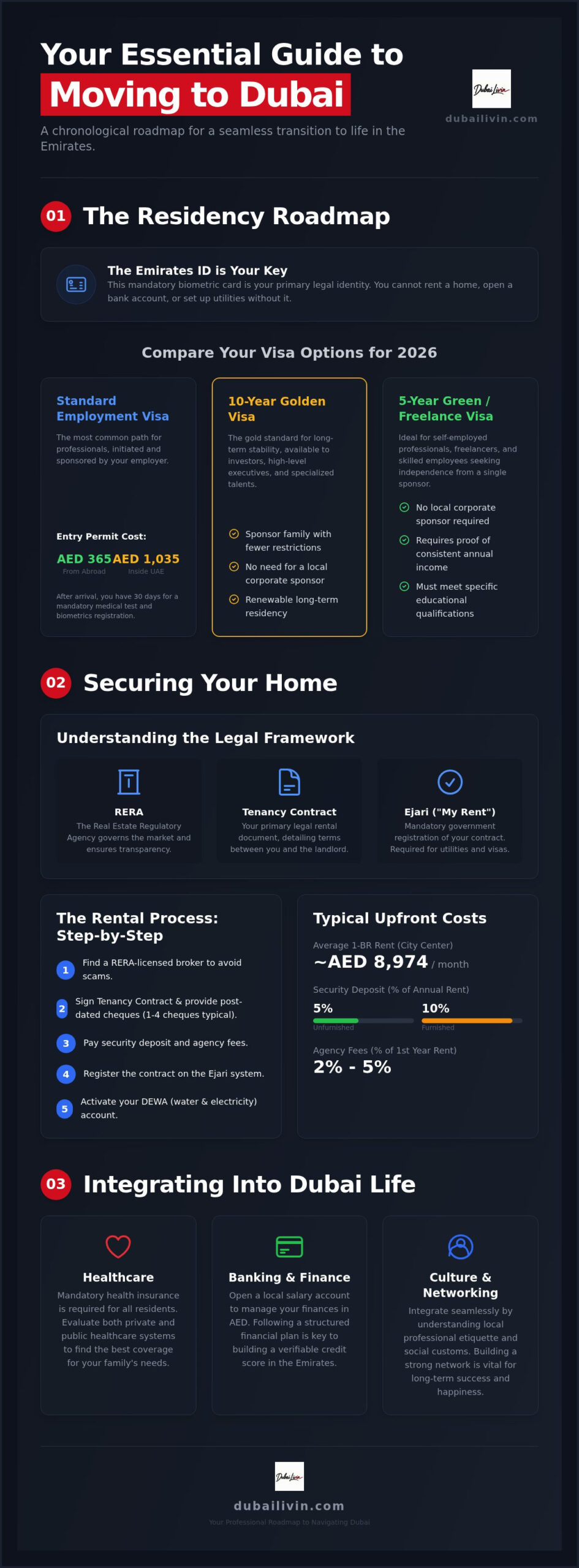
Central to this administrative system is the Emirates ID. You’ll find it’s impossible to rent a home, open a bank account, or set up home utilities without this biometric card. It serves as your primary legal identity and is mandatory for every resident. For those who value independence, the Green Visa and Freelance permits offer a five-year residency path without requiring a local corporate sponsor. These options are ideal for self-employed professionals who can prove a consistent annual income and specific educational qualifications.
Standard Employment and Corporate Sponsorship
For most professionals, the journey begins with an employer-sponsored visa. Your company initiates the process by applying for an entry permit. According to 2026 regulations, a residence entry permit costs AED 1,035 if applied for from inside the UAE, or AED 365 if you’re currently abroad. Once you arrive, you have a 30-day window to complete a mandatory medical fitness test and biometric registration. This sequence is non-negotiable; you’ll undergo blood tests and a chest X-ray to screen for communicable diseases before your residency is digitally linked to your passport.
Long-Term Residency and Investor Pathways
The 10-year Golden Visa remains the gold standard for stability in the Emirates. It’s available to property investors, high-level executives, and specialized talents in science or culture. Unlike standard permits, the Golden Visa allows you to sponsor family members and domestic staff with fewer restrictions. For those looking to settle permanently, the retirement visa offers a five-year renewable path, provided you meet specific financial or property ownership thresholds. This flexibility ensures that this moving to dubai guide for expats provides a roadmap not just for a short-term contract, but for a sustainable lifestyle choice.
Securing a Home: Understanding Rental Laws and Housing Standards
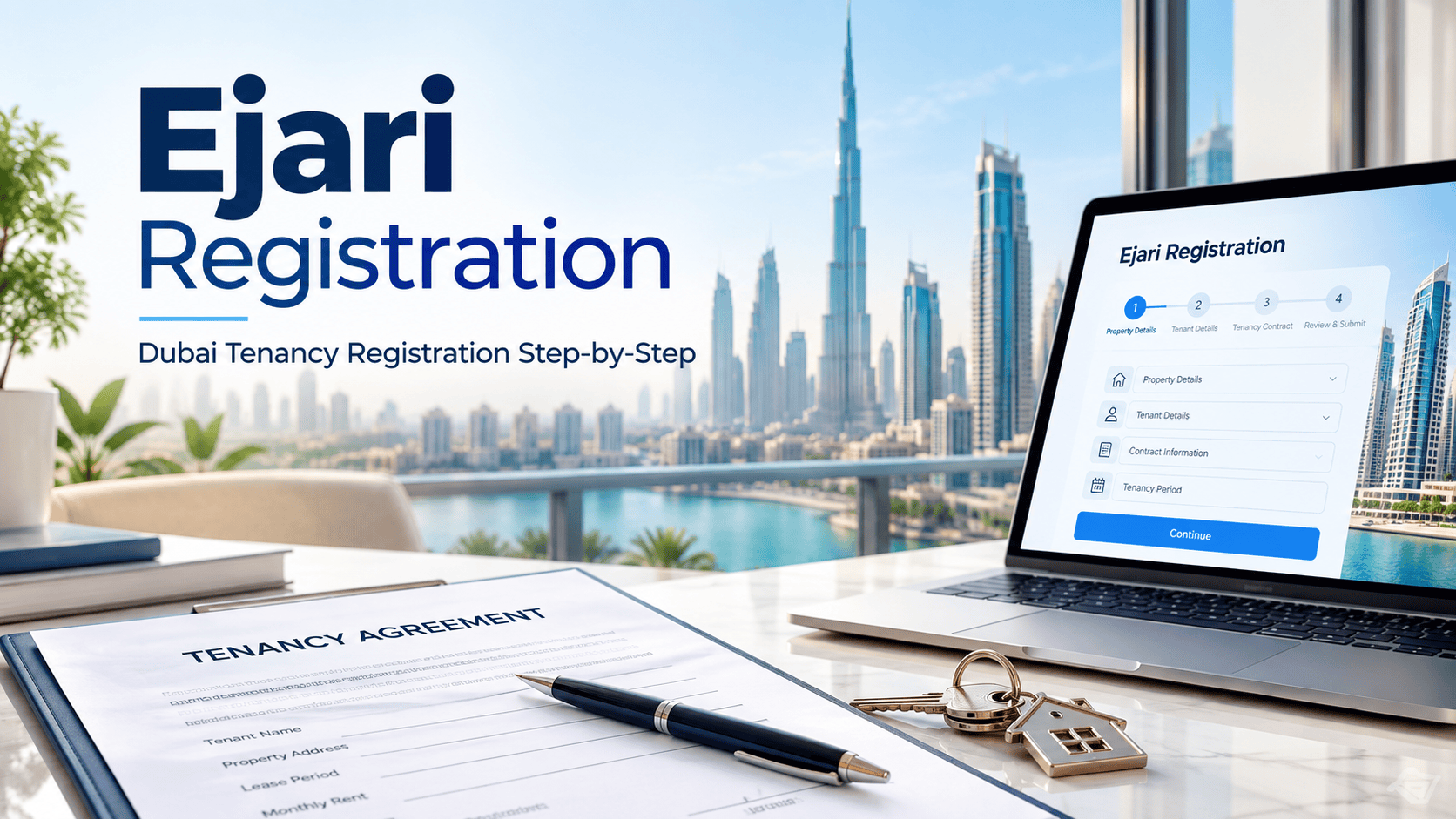
Finding a residence is the most significant step in any moving to dubai guide for expats. The Real Estate Regulatory Agency (RERA) governs the market, ensuring that the relationship between landlord and tenant remains transparent. Your Tenancy Contract is the primary legal document, but it only gains full legal weight once registered through the Ejari system. Ejari, which means “my rent” in Arabic, is a mandatory government registration that protects your rights and is required to set up utilities or sponsor dependents. Before you commit to a lease, ensure your residency status is in order by consulting the Official UAE Residence Visa Information, as you’ll need your Emirates ID to complete this registration.
The payment system in the Emirates typically relies on post-dated cheques. While some landlords now accept digital payments, the standard practice involves providing one to four cheques for the entire year’s rent. You should also be aware of the RERA rental index, which caps annual increases at a maximum of 20% depending on market averages. Landlords must provide a 90-day notice for any changes to the contract terms or price. For a deeper look at specific areas, our neighborhood and community reviews offer first-hand insights into local life and current market trends.
The Rental Process from Search to Move-In
When searching for a home, always verify that your broker is RERA-licensed to avoid common rental scams. Expect to pay a security deposit of 5% of the annual rent for unfurnished properties or 10% for furnished ones. Agency fees typically range from 2% to 5% of the first year’s rent. Once the contract is signed, you’ll need to activate your DEWA account for water and electricity. Average rents for a one-bedroom apartment in the city center currently hover around AED 8,974 per month, so budgeting for these upfront costs is essential.
Evaluating Residential Standards and Building Amenities
Housing standards in the city are exceptionally high, with most buildings offering 24-hour security and professional management. One critical distinction to look for is “chiller-free” versus district cooling. In chiller-free buildings, the landlord covers the air conditioning costs, whereas district cooling can add a significant monthly expense to your utility bill. Standard amenities usually include a temperature-controlled pool and a fully equipped gym; these are considered baseline expectations rather than luxury add-ons. Assessing the quality of facility maintenance during your viewing can save you from future frustrations with repairs or service delays.
Evaluating Healthcare and Education Systems
The quality of social infrastructure is a deciding factor for any family using a moving to dubai guide for expats. You’ll find that the healthcare and education sectors are highly regulated, prioritizing international standards and student safety. In 2026, health insurance remains mandatory for all residents. Your employer typically provides coverage, but if you’re on a Golden or Green Visa, you must secure your own plan. Costs vary based on coverage depth; basic plans start around AED 500, while premium global coverage can exceed AED 20,000 annually. This dual system of public and private care ensures that every resident has access to essential medical services.
Navigating the Medical Landscape
The Dubai Health Authority (DHA) oversees all medical facilities, ensuring rigorous licensing for both public and private hospitals. While public hospitals offer excellent care, most expats prefer the private sector for its shorter wait times and diverse range of international specialists. Registering with a local clinic is a straightforward process requiring your Emirates ID and insurance card. If you need specialist care, most insurance plans allow direct booking without a GP referral, though it’s wise to check your specific policy first. The pharmacy system is equally efficient; however, certain medications require a localized prescription from a DHA-licensed physician to be dispensed.
Selecting the Right Educational Path
Choosing a school is often the most complex task for parents. The landscape is dominated by private international schools offering British, American, or International Baccalaureate (IB) curricula. The Knowledge and Human Development Authority (KHDA) provides a vital service through its annual inspection framework. Schools are rated from “Weak” to “Outstanding,” and these ratings directly influence a school’s ability to adjust its tuition fees. For the 2026-2027 academic year, fees have been frozen across many institutions, with annual costs ranging from AED 12,700 to over AED 110,000.
Admissions are competitive, particularly for “Outstanding” rated schools. The academic year typically begins in late August, though schools following the Indian curriculum start in April. Beyond primary and secondary schooling, the city has seen a massive expansion in international university branches. This growth allows students to earn degrees from prestigious global institutions while remaining in the Emirates. When reviewing options, this moving to dubai guide for expats recommends visiting campuses personally to evaluate the “Knowledge Fund” contributions and extracurricular facilities, which are often central to the local student experience.
Step-by-Step Financial Onboarding and Banking
Managing your money effectively is a cornerstone of this moving to dubai guide for expats. Once your residency visa is stamped and your Emirates ID is in hand, your next objective is opening a local bank account. In 2026, most residents require a salary account to facilitate monthly payments and to issue the post-dated cheques necessary for the rental market. To get started, you’ll need your original passport, your Emirates ID, and a copy of your employment contract or salary certificate.
Building a local financial footprint also involves the Al Etihad Credit Bureau. Unlike many other global markets, your credit history doesn’t follow you from abroad; you’ll be starting from scratch. Establishing a solid score early by managing credit cards or personal loans responsibly is essential if you plan to apply for a mortgage later. For those looking for deeper financial insights, our comprehensive relocation guides provide detailed breakdowns of monthly budgeting and long-term wealth preservation strategies.
Choosing Your Primary Banking Partner
The UAE offers a sophisticated banking landscape where you can choose between traditional powerhouses and agile, digital-only challenger banks. Traditional banks provide extensive branch networks and physical relationship managers, which some find reassuring when handling large transactions. Conversely, digital-only banks often offer faster onboarding and superior mobile interfaces for daily spending. You must also decide between conventional banking and Sharia-compliant options, which operate on profit-sharing principles rather than interest. A Salary Transfer Letter is a formal document from your employer confirming your monthly income and stating that your salary will be deposited directly into your chosen bank account.
Managing Cross-Border Finances
Living in a tax-free environment offers a unique opportunity for wealth accumulation, but it requires careful planning. While the UAE imposes 0% personal income tax, you must remain aware of your tax residency obligations in your home country. For example, U.S. citizens are required to file taxes on their worldwide income regardless of where they live. To manage multi-currency needs, many expats utilize international investment platforms or offshore accounts to keep their savings liquid and accessible across borders. This moving to dubai guide for expats suggests automating your international transfers to avoid high retail exchange rates and hidden transaction fees at the teller window.
Integrating into the Professional and Social Fabric
Success in the Emirates is built on relationships as much as it is on technical skill. Adopting a “Knowledgeable Resident” mindset means looking beyond the skyscrapers to understand the city’s social heartbeat. This moving to dubai guide for expats emphasizes that while the city is futuristic, it remains deeply rooted in traditional hospitality and professional etiquette. You’ll find that networking isn’t just a corporate buzzword here; it’s the primary way business gets done. Whether you’re attending a high-level summit or a casual coffee meeting, your ability to navigate these social nuances will define your experience.
Logistics also play a major role in your daily comfort. If you plan to drive, check if your home country’s license is eligible for a direct swap. Nationalities from the UK, US, and most of Europe can often convert their licenses for a small fee without taking a road test. For those relying on public transit, the Dubai Metro and Tram systems are world-class. You’ll need a Nol card to access these services, which also works for RTA buses and even some grocery payments. Understanding these small daily systems early on reduces the friction of relocation significantly.
Professional Growth and Networking
LinkedIn is the dominant platform for professional visibility in the region, but it doesn’t replace face-to-face interaction. The local market values personal trust, so expect to spend significant time in “majlis” style meetings or networking events. In 2026, professional certification trends favor sustainability and AI-driven expertise, reflecting the city’s broader economic goals. You must also distinguish between mainland and free zone corporate structures. Mainland companies allow you to trade anywhere in the UAE, while free zone entities offer specialized ecosystems and 100% foreign ownership, though they are generally restricted to operating within their specific zone.
Daily Life and Cultural Adaptation
While English is the lingua franca of business, learning basic Arabic phrases is a powerful way to show respect for the local culture. It opens doors in government offices and builds rapport with Emirati colleagues. You’ll also need to adapt to the Saturday-Sunday weekend, which aligns with global markets, though Friday remains a significant day for mid-day prayers and family gatherings. Public holidays, such as Eid Al Fitr and National Day, are celebrated with vibrant displays and community events. To find the specific community that matches your lifestyle, explore our detailed community reviews to find your perfect fit. Building a social circle takes time, but by attending local workshops or joining hobbyist groups, you’ll soon find the community you need to thrive.
Taking the First Step Toward Your Future in the Emirates
Relocating to a global hub requires more than just ambition; it demands a precise understanding of the legal and financial frameworks that govern daily life. By mastering the 2026 residency landscape and securing your home through the Ejari system, you’ve already cleared the most significant hurdles. This moving to dubai guide for expats has provided the roadmap, but the real journey begins with choosing the right community and building your local financial footprint. Success in this city is a blend of regulatory compliance and proactive social integration.
At Dubai Livin, we’ve been trusted by thousands of expats since our founding to provide clarity in a fast-moving market. We offer expert-vetted market insights and direct connections to licensed real estate professionals to ensure your transition is as smooth as possible. Whether you’re navigating the school admissions cycle or comparing banking partners, we’re here to bridge the gap between your questions and local expertise. Start your relocation journey with our comprehensive guides and enter the market with the confidence of a seasoned resident. The city’s vibrant lifestyle and tax-free opportunities are waiting for you.
Frequently Asked Questions
How long does the visa process typically take for a new expat?
The visa process typically takes between two to four weeks from the moment your entry permit is issued. This timeline includes the mandatory medical fitness test and the biometrics appointment for your Emirates ID. While the initial entry permit can be approved in as little as 48 hours; the final residency stamping requires physical processing. It’s best to allow a full month for all administrative steps to be finalized.
Can I move to the UAE without a job offer already in hand?
Yes, you can move to the UAE without a job offer by utilizing specific visa categories like the Job Seeker Visa or the Five-Year Multiple-Entry Tourist Visa. The Job Seeker Visa is specifically designed for skilled professionals to explore opportunities locally. Additionally, the Green Visa allows for self-sponsorship if you meet the income and education criteria. These options provide a flexible entry point for those mentioned in this moving to dubai guide for expats.
What is the Ejari system and why is it mandatory for renters?
The Ejari system is a mandatory government platform for registering all private rental contracts in the UAE. It serves as a legal safeguard for both the tenant and the landlord; ensuring the contract is recognized by the courts in case of a dispute. Without a valid Ejari certificate, you cannot set up your DEWA utilities, apply for internet services, or sponsor residency visas for your family members.
Do I need a local driving license to drive in the country?
You must obtain a UAE driving license once you have received your residency visa. While tourists can drive using an international permit or a license from specific approved countries, residents are legally required to hold a local license. Citizens from many Western and GCC nations can simply convert their existing home license for a fee; however, others may need to undergo mandatory training and pass a local road test.
Is health insurance provided by the employer or do I buy it myself?
Employers are legally required to provide a minimum level of health insurance for their employees. However, the responsibility for covering dependents varies; some companies include family coverage as a benefit, while others require you to purchase it privately. It’s essential to review your labor contract to understand the depth of your coverage. If you are self-sponsored on a Green or Golden Visa, you must manage your own insurance procurement.
What are the main curricula offered in international schools?
The international school landscape is diverse, with the British, American, and International Baccalaureate (IB) being the most prominent choices. You’ll also find a significant number of schools following the Indian CBSE or ICSE frameworks. When choosing, consider the KHDA ratings and the long-term university goals of your children. This moving to dubai guide for expats recommends starting the application process at least six months before the academic year begins to ensure placement.
How do I transfer my existing credit history to the UAE?
You cannot directly transfer your international credit history to the UAE; you must build a new score from scratch with the Al Etihad Credit Bureau (AECB). Your local credit profile begins once you open a bank account and utilize financial products like credit cards or utility contracts. Banks will use this local data to determine your eligibility for personal loans or mortgages. It’s wise to maintain a low debt-to-income ratio to ensure a strong local credit rating.
Your next steps
This guide is the map. The cluster pages below are the detailed routes for each stage of your move.
- Choosing your visa: UAE Visa Types 2026 — Complete Comparison
- Finding work first: How to Find a Job in Dubai Before You Move
- Setting up money: Best Bank Accounts for Expats in Dubai
- Choosing where to live: browse the neighbourhood guides starting with Dubai Marina
- Moving to Dubai with family: Dubai International Schools Guide and the UAE Dependent Visa guide
- Your first month: First-Month-in-Dubai Checklist
Planning your move and have a question we haven’t answered? Message us on WhatsApp. We’re Dubai residents and happy to help you find the right resource for your situation.
Last reviewed: June 2026 by RaynaSean, Dubai-resident writer covering expat relocation since 2020.
Primary sources: Federal Authority for Identity & Citizenship (icp.gov.ae), GDRFA Dubai, Ministry of Human Resources & Emiratisation (MoHRE), Dubai Health Authority, KHDA.
Disclaimer: This guide is informational, not immigration or financial advice. Visa rules and thresholds change; verify current requirements with official UAE government sources or a licensed PRO before acting.