










For many people, the goal is to secure a job before relocating. This guide explains the visa process, job‑search strategies, résumé tips, and common questions.
Important: UAE visa rules and labour laws can change quickly. Always verify requirements on official government websites, such as the Federal Authority for Identity, Citizenship, Customs & Port Security (ICP), the General Directorate of Residency and Foreigners Affairs (GDRFA), and the Ministry of Human Resources & Emiratisation (MOHRE), before applying.
Choose the Right Visa Route

Standard work permit & residence visa
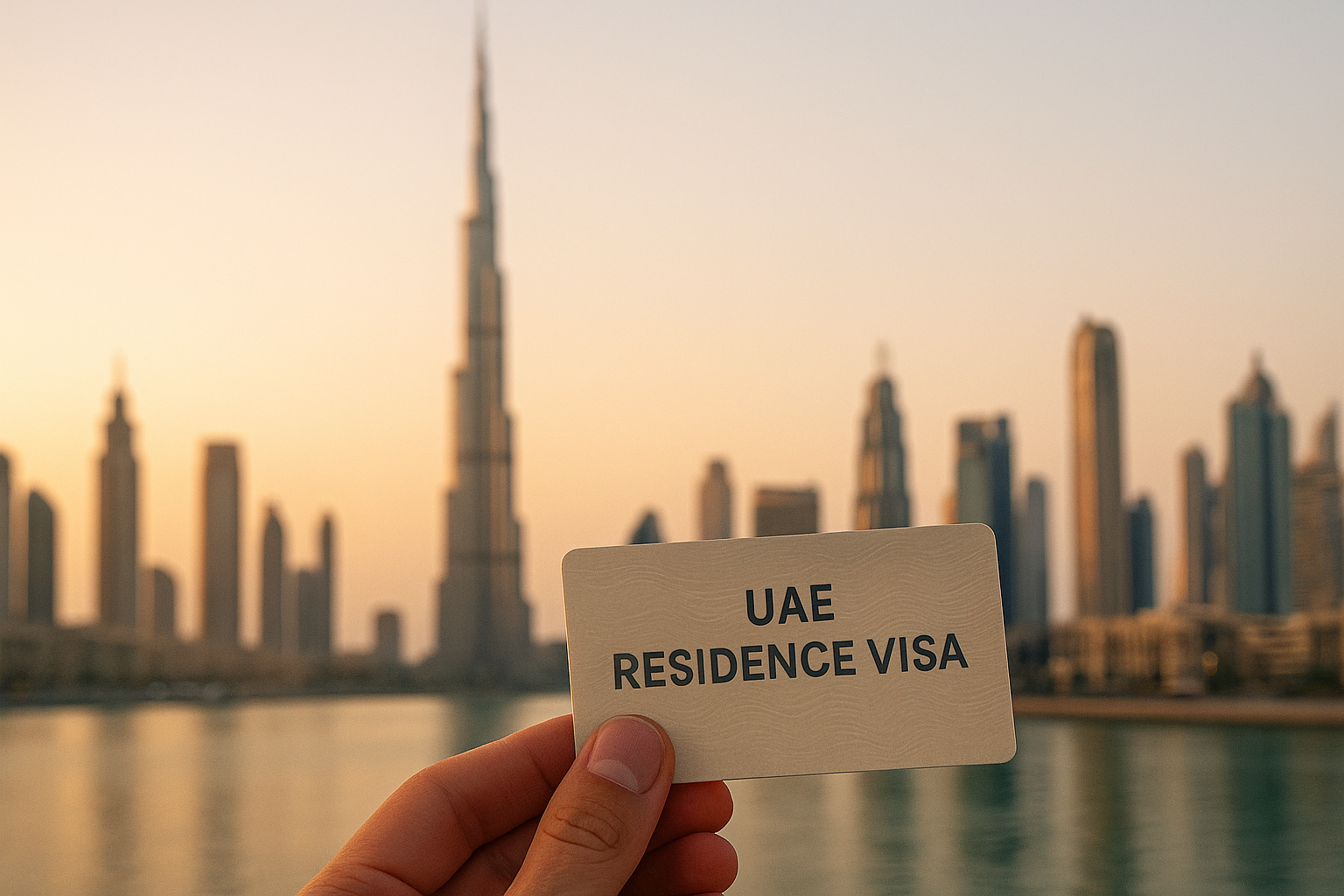
- Your employer generally arranges a UAE work permit once you have an offer of employment. The permit is linked to a residence visa, usually valid for 2 years for private‑sector jobs. You can enter the UAE on a tourist/visit visa to job‑hunt, but you must not work until the work permit is issued.
- MOHRE offers 13 types of work permits, including permits for recruiting from outside the UAE, transferring employees between establishments, temporary or part‑time work, and freelance permits. To obtain a license, you must be at least 18 years old, have a job that matches the company’s business activity, and meet health, security, and licensing requirements.
Green visa (self‑sponsored 5‑year residence)
A Green visa allows skilled professionals, freelancers and self‑employed people to sponsor themselves without needing an employer. It is valid for five years and renewable. Two groups qualify:
Freelancers/self‑employed: must hold a permit from MOHRE, have a bachelor’s degree/specialised diploma and prove annual self‑employment income of at least AED 360,000 (USD 98,000) for the previous two years or show financial solvency
Skilled employees: need a valid employment contract, belong to MOHRE skill levels 1–3, hold at least a bachelor’s degree, and earn AED 15,000/month or more.
Golden visa (long‑term residence)
The Golden visa is a long‑term residence permit (5 or 10 years) for investors, entrepreneurs, scientists, outstanding students, specialised talents and frontline heroes. Benefits include multiple-entry 6-month residence visas to complete the residence process, the ability to stay outside the UAE for more than 6 months without cancelling the visa, and the ability to sponsor family members and unlimited domestic helpers. Applicants don’t need a UAE sponsor.
Key eligibility categories include:
- Investors in public investments: deposit at least AED 2 million in an accredited investment fund and fully own the invested capital; provide proof of medical insurance.
- Real‑estate investors: own property worth at least AED 2 million (mortgaged property allowed if financed by local banks)u.ae.
- Entrepreneurs: have a project worth at least AED 500,000 (approved by an auditor) and receive support from a recognised business incubator.
- Specialised talents: doctors, scientists, creatives, inventors, executives, specialists in engineering and science (including AI, epidemiology, big data, electrical and software engineering), u.ae. Requirements include recommendation letters from relevant authorities.
- Outstanding students: high‑school toppers and university graduates with high GPAs can receive visas (5 or 10 years depending on the institution)u.aeu.ae.
- Pioneers of humanitarian work and frontline heroes (such as healthcare workers who served during COVID‑19) also qualify.
A “One Touch” Golden Visa service simplifies applications and renewals; applicants submit visa, ID, and residency requests in a single process.
Blue visa (new 10‑year residency for sustainability champions)
Launched in July 2025, the Blue visa grants 10‑year residency to individuals who make exceptional contributions to environmental protection and sustainability. Eligible candidates include members of international organisations, NGOs, award‑winning researchers, and activists in environmental work. Applications can be made through the ICP website or via nomination by the UAE authorities.
Virtual work (digital nomad) visa
Foreigners employed outside the UAE can live in Dubai with a virtual work visa. The one‑year, self‑sponsored visa allows remote workers to access utilities, banking, education and telecom services. Applicants must prove remote employment and earn at least USD 3,500/month.
UAE’s virtual working programme (similar to the federal scheme) requires proof of employment with a minimum 1-year contract and a salary of≥ USD 5,000. According to Dubai’s investment portal, benefits include unfettered travel, the ability to sponsor family members, and access to services. Applicants must provide a passport valid for 6 months, health insurance, and bank statements.
What Happens After You Accept a Job Offer?
Once you secure a job, your employer or PRO (Public Relations Officer) usually handles the following steps:
Entry permit: your company obtains a work entry permit from MOHRE, allowing you to enter the UAE.
Medical examination and health card: you’ll undergo a medical test (blood test and, sometimes, chest X‑ray). Upon passing, you’re issued a health insurance card, which is mandatory in Dubai.
Labour/work permit: your employer submits your contract and their labour licence to MOHRE for a formal work permit.
Residence visa & Emirates ID: you provide medical clearance, entry permit, passport photos and processing receipts. The GDRFA stamps your residence visa and captures biometrics for your Emirates ID. The ID is essential for banking, phone plans, housing contracts, and most services.
Many processes have been streamlined through the Work Bundle initiative, reducing steps and required documents for work permits and residency.
Know Your Rights: UAE Labour Law
The UAE Labour Law (Federal Decree‑Law No. 33 of 2021 and subsequent amendments) aims to protect employees:
- Written contracts must specify role, salary, working hours, leave and end‑of‑service benefits. Employers cannot change contracts unilaterally.
- Non‑discrimination: it is illegal to discriminate based on race, colour, sex, religion, national or social origin or disability, and women must receive equal pay for the same work.
- Prohibition of forced labour and harassment: the law bans harassment, bullying, and unlawful detention (chambers.com).
- Mandatory health insurance for employees in Dubai.
Always consult the Ministry of Human Resources & Emiratisation (MOHRE) for the latest policies; regulations may be updated.
Compensation and Benefits
Dubai offers a tax‑free personal income environment, but salaries vary widely by sector and experience:
Basic salary + allowances: packages usually combine a base salary with allowances for housing, transport and sometimes schooling. Health insurance is mandatory and traditionally provided. Some employers cover annual flight tickets for expatriates and their dependents, but this is negotiable.
Annual leave: at least 30 calendar days per year after one year of service at virtuzone.com. Employees also get public holidays, sick leave (up to 90 days with varying pay), and maternity/paternity leave (60 days for mothers, 5 days for fathers).
End‑of‑service gratuity: statutory lump‑sum payment based on length of service. For the first five years, employees receive 21 days’ basic salary, rising to 30 days thereafter. Recent reforms also allow employers to offer a funded savings plan instead of a virtual one.
When negotiating, request a breakdown of expected living costs (rent, transport, schooling) and ensure your package meets your needs.
Understand the Dubai Job Market
Dubai’s economy is diverse and continues to grow. Industries with strong hiring include:
Technology & IT Demand for software developers, AI/ML engineers, data scientists, cybersecurity analysts, and cloud architects is driven by digital transformation
Finance & Accounting Dubai’s role as a global financial hub creates opportunities for investment analysts, compliance officers, and fintech experts
Healthcare: Doctors, nurses, medical researchers, and allied health professionals remain in demand due to medical tourism and government healthcare initiatives.
Hospitality & Tourism: Hotels, restaurants, and event management continuously recruit, especially for significant events and conferences.
Construction & Real Estate Civil, electrical, and mechanical engineers, BIM specialists, and skilled technicians support Dubai’s infrastructure projects.
Sales & Marketing Digital marketing, e‑commerce, and sales roles remain vital as companies expand their online presence.
Legal, Education and HR: Corporate lawyers, compliance officers, teachers, and HR professionals are needed in both the public and private sectors.
Green & Sustainability Roles in renewable energy, ESG reporting, and environmental consulting are rising due to the UAE’s net‑zero ambitions.
Emerging skills: AI & machine learning, data analytics, cybersecurity, cloud computing, digital marketing, sustainability, project management and soft skills (communication, adaptability) are among the most sought‑after in 2025.
Entry‑level roles: Fresh graduates often find opportunities in hospitality, retail, customer service, sales and internships/apprenticeships. The career guide notes that success depends on leveraging transferable skills, networking, and obtaining certificates. Sectors such as tourism and sales have lower experience requirements.
Optimise Your Online Presence
LinkedIn & local platforms
Recruiters commonly review candidates’ online profiles before contacting them. Keep your LinkedIn up to date with:
- Professional headline: summarise your role, niche and impact.
- About section: brief (3–5 sentences) overview of your specialities, industries and achievements.
- Experience: Use bullet points and metrics to describe accomplishments; add a one‑line description if the company is not well known.
- Skills: list hard and soft skills that match your target roles; mirror keywords from job descriptions.
- Contact details: include an email address and/or WhatsApp number if comfortable.
Other channels: Bayt.com is widely used in the Middle East; GulfTalent, Naukrigulf, Dubizzle, Monster Gulf, Indeed UAE, Laimoon, CareerJet, Khaleej Times Jobs, and GN Careers all host job listings. Intranet. Joining LinkedIn and industry-specific WhatsApp/Telegram groups can also open doors.
Finally, audit your personal social media. Convert non‑professional accounts to private or ensure they present you in a professional light.
Prepare a Dubai‑Ready CV

Recruiters in Dubai often scan résumés. Keep your CV to 1–2 pages and make it compatible with applicant‑tracking systems (ATS):
- Name & contact: include email and international phone number. It is customary to mention your nationality and current location/visa status (especially if you already live in the UAE). If you hold dual nationality, list both.
- Professional photo: a head‑and‑shoulders photo with a neutral background is generally expected.
- Professional summary: tailor it to the role (3–4 lines)—set metrics to highlight achievements.
- Experience: list roles in reverse chronological order with bullet points showing outcomes (e.g., “increased sales by 20%,” “managed a team of 12”). Provide a one‑line description of the company if it is not globally known.
- Education & certifications: briefly describe degrees; if an institution is not widely recognised, add context (e.g., ranking or accreditation): its licenses (e.g., CPA, PMP) and language proficiency.
- Skills: divide into technical (software, languages) and soft skills (leadership, problem‑solving). Mirror terms from the job description (e.g., SEO/SEM, data analysis, UI/UX) to improve ATS ranking.
- Avoid attaching passports or degree certificates unless specifically requested; attachments can deter employers.
Work with Reputable Dubai Recruiters
Recruitment agencies play a significant role in Dubai. Legitimate agencies never charge candidates—employers pay their fees. Niche specialists include:
Jivaro Partners Marketing & Communications
ESP International Conferences, events & hospitality
MCG & Associates PR, publishing & marketing
Robbert Murray Development, construction, engineering & public sector intranet
BAC Middle East Engineering, marketing & management intranet
When interacting with recruiters, provide a concise cover note explaining why you’re a good fit for the role. Keep track of applications and follow up politely after 5–7 days.
Network Strategically
Dubai’s hiring culture values referrals. Build a network before moving:
- Attend virtual job fairs and webinars in your sector.
- Join professional groups on LinkedIn, WhatsApp or Telegram; participate in discussions and share insights.
- Reach out to hiring managers directly with a personalised message and tailored CV.
- Leverage alum networks or professional associations; a warm introduction increases your chances.
Nail the Interview & Offer Stage
- Research the company and the market thoroughly—understand local competition and how your skills can contribute.
- Prepare UAE‑specific examples: highlight cross‑cultural teamwork, projects in the GCC region and client experience in Middle Eastern markets.
- Discuss the total package: salary, housing/transport allowance, medical coverage, annual flights, education support for dependants, visa costs and relocation assistance: clarify probation period, notice period, working hours and remote/hybrid policies.
- Ask about training and career development. Employers appreciate candidates interested in growth.
Frequently Asked Questions
Can I look for work in Dubai on a tourist visa?
Yes. Nationals of many countries receive a tourist/visit visa on arrival (30‑ or 90‑day validity) and can search for jobs. However, working on a tourist visa is illegal, and you must convert to a work permit before starting employment. Penalties for working without the proper visa include fines, deportation and entry bans.
What is the six‑month rule for UAE residence visas?
Most residence visas become invalid if the holder remains outside the UAE for more than 180 days. Exceptions apply to diplomats, students, domestic helpers accompanying Emiratis and investors. If you plan to travel for an extended period, confirm your status with ICP or GDRFA.
Can my employer cancel my residence visa while I’m abroad?
Yes. Employers can initiate cancellation if you remain outside the UAE for more than 6 months or if your employment ends. Once cancellation starts, processing is usually swift. Always maintain communication with your employer and check your visa status on the ICP or GDRFA portal.
What jobs are easiest to get in Dubai without experience?
Entry‑level roles exist in hospitality, retail, customer service, sales, call centres and real‑estate brokerage trainee positions. The 2025 career guide notes that the hospitality, retail, and customer service sectors often hire candidates with little or no experience. Emphasise a positive attitude, reliability, and a willingness to learn. Internships and apprenticeships provide valuable footholds.
Which skills are most in demand in 2025/2026?
High‑demand skills include AI & machine learning, data analytics, cybersecurity, cloud computing & DevOps, digital marketing & e‑commerce, project management, UI/UX design, finance & FP&A, renewable energy & sustainability, and soft skills like communication and adaptability. Certifications such as PMP, PRINCE2, AWS, Azure, CISSP, LEED, and PR or marketing diplomas can enhance your profile.
How long does it take to find a job in Dubai?
The average job‑search period is around six months, but it varies by sector, networking efforts, and visa status. Candidates in high‑demand sectors (tech, healthcare) and those already in the UAE with a valid visa often find jobs faster.
Do I need a visa before applying for jobs in Dubai?
You can apply for jobs from abroad without a UAE visa. Employers often sponsor the work visa once they make an offer. If you plan to search for jobs while in the UAE, you can arrive on a tourist/visit visa or apply for a job seeker visa (introduced in 2022). The job seeker visa allows graduates from the world’s top universities and people meeting specific skill levels to stay in the UAE for 60–120 days to hunt for work (check the latest criteria on ICP’s website).
What happens if I lose my Dubai job?
UAE labour law provides a grace period (often 30–180 days) after job loss to change your status, find a new employer or leave the country. The mandatory unemployment insurance scheme launched in 2023 covers most employees; subscribers who lose their jobs (for reasons beyond their control) receive monthly payments for up to three months.
How can I avoid job scams in Dubai?
Be sceptical of offers that require payment for job placement, visa processing or interview slots. Legitimate employers and recruiters pay all hiring fees. Ever shared personal documents before verifying the company’s legitimacy? See official job boards and consult the Dubai Police or MOHRE if you encounter suspicious adverts.
Quick Job‑Hunt Toolkit
- Job boards: LinkedIn Jobs, Bayt, GulfTalent, Naukrigulf, Dubizzle, Monster Gulf, Indeed UAE, Laimoon, CareerJet, Khaleej Times Jobs, GN Careers, eFinancialCareers.
- Documents: multiple PDF versions of your CV tailored to different roles; digital copies of your passport, degrees, transcripts and reference letters. Having scans speeds up visa processing.
- Tracking: maintain a spreadsheet of applications with dates, contacts and follow‑ups.
- Follow‑ups: send brief, polite follow‑up emails 5–7 days after applying. Note your interest and offer any additional information.
- Networking: attend local and virtual job fairs, join industry groups and connect with recruiters on LinkedIn. Referrals significantly improve your chances.
- Beware of scams: legitimate agencies never charge candidates fees. Intranet. If someone asks you to pay for a job, visa or interview, walk away.
Finding a job in Dubai from abroad requires planning and persistence. By understanding visa pathways, preparing a tailored CV, building a professional online presence and networking effectively, you can increase your chances of securing a position before you move. Stay up to date with UAE labour laws and visa regulations through official sources, and focus on developing skills aligned with Dubai’s booming sectors. Good luck with your job search!